
Pricing on the move: A review of increasing carrier costs in 2026
Whether you are a small ecommerce retailer or a larger multinational, the chances are that you have just had a carrier rate increase - commonly known as GRI (General Rate Increase). These are typically levied every January and are charged predominantly by the big express carriers but other carrier organisations are now following suit.
Whilst you have probably known about these increases for a few months, it’s not until you see the invoice at the end of January that you fully understand the significance of these changes as the general rate increase will impact your base transportation charge but given that fuel (as an example) is charged as a % on top of this bate rate, the increased cost can be more surprising than you anticipated.
What’s the latest with carrier pricing?
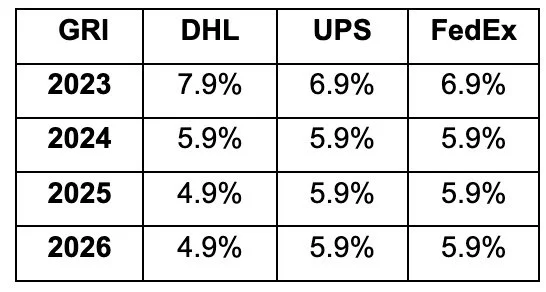
This is how carrier rates have moved over the past four years
The sharp rise in 2023 closely followed inflation running above 10%, which helps explain the scale of the GPIs that were applied across this period
Top three reasons carriers can justify these increases
The carriers are under constant pressure from retailers to improve transit times, increase operational efficiency and keep up with innovation trends in the market:
Inflation - with large variable costs such as hubs and wages, they are not immune to inflationary pressures
Network investments - modernising their fleet, hubs and investing in new technology requires vast capital spend
Shifting capacity - for example, US tariffs have dramatically reduced volume into that geography, but the service expectation remains high despite large economies of scale reductions
How is that affecting retail?
The problem for many retailers is that they are simply not able to raise pricing to the same degree, as competition is fierce online and savvy shoppers will buy elsewhere…
Some costs are outside of your control: whilst you may have negotiated good rates when you introduced your carrier, elements like fuel, surcharges and GRIs are determined by market conditions
Fixed costs: if you are a larger player, you almost certainly have a fixed transportation tariff but for start-ups and smaller players it’s really hard to get good rates with little leverage
Innovation matters: looking strategically at how you manage your deliveries and making different choices can help keep on top of these rising costs. For example, offering pick up options instead of home delivery could be an option to consider
Top tips for managing rising costs
Audit your shipping data: Are some areas costing you more than others? Where are you being hit hardest with surcharges, and can you take action to reduce these?
Packaging: Most carriers charge on volumetric weight rather than dead weight so ensuring you have lean packaging is not only good for the environment but also good for your business
Technology & Innovation: Calls into your support team also add cost. Are there ways to improve visibility of your delivery or to give you warning signs when things are going awry?
Final Thoughts
Whether you’re a seasoned logistics professional or a small online seller looking to keep margins under control, understanding these costs and charges and acting on them will help you navigate the rising cost of shipping in 2026 and beyond.
If you would like help with this, contact us. We have many years’ experience working with carriers - and a proven track record in helping retailers reduce costs.
Contact Carrie - carrie@carriboo.co.uk or +44 203 536 4784